



























fbpx

Motion & Graphics Tutorials

User Stories

Easier, Faster, Cost-Effective, But Never "Cheap": How To Build Out A Successful Media Business In Difficult Economic Times By Embracing Simpler Workflows and New Technologies

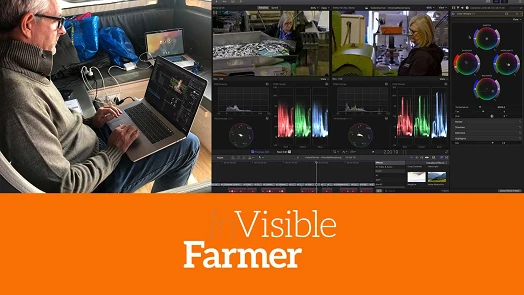
The Final Cut Pro X success stories keep on coming. This time we look at Norway's largest newspaper VG, whose TV arm switched to FCPX enabling them to expand their online media production.
Easier, Faster, Cost-Effective, But Never "Cheap": How To Build Out A Successful Media Business In Difficult Economic Times By Embracing Simpler Workflows and New Technologies

In-Depth Tutorials

Demystifying Final Cut Pro XMLs by Philip Hodgetts and Gregory Clarke

XML is an acronym that gets used a lot in editing and the transfer of media in the FCPX ecosystem. But what exactly is XML?, how is it used and how can you begin to understand the power of the plain text language? Workflow experts Philip Hodgetts and Greg Clarke start with the basics of XML and…

We built a pool! Publishing animating Motion textures to Final Cut Pro X

Want moving textures in Final Cut Pro X? Plugin building expert Fox Mahoney shows us how to construct a moving water texture in Motion and publish it to FCPX. Great knowledge that will extend the capabilities of 3D text even further. Link to the free finished moving water texture generator plugin…
animating textures fcpx

Big Sur & Apple Silicon

Mobile Creator

sony_fs_3d_rig

So most of us want to get our hands on a Sony PMW-F3 and test its capabilities, and as more and more units get out there, there should be more and more edit throughput. But while delivery is still eagerly expected by some, the guys at RealVision recently got invited to use two F3s by Sony! And the reason? To test out the camera's stereoscopic 3D possibilities. More after the break.

This is an intriguing piece by Clyde DeSouza and you can read it in full here at RealVision. He talks about Depth of Field in stereoscopic movies such as Tron Legacy, and how the PMW-F3 is part of the next link in the chain.

Tron Legacy was shot on full frame sensor cameras, by the Cinematographer Claudio Miranda and Director Joe Kosinski, who had an appetite for creative experimentation and exploration. They employed 8 Sony F35s as they attempted to create a new benchmark for 3D cinema, read more about the production process here. 

The Sony F35 helped give TRON legacy it’s distinctive 3D look, and now Sony has introduced the PMW F3, to put large frame sensor size within the reach of budget movie makers.

They'll be offering the option of 3D Link functionality for the PMW-F3 in the coming months, via an optional software upgrade, allowing two cameras to be adjusted, controlled, and operated simultaneously by simply linking one to the other via a special cable. 

Log in to comment